
Your website might look impressive, load beautiful images, and explain your services perfectly. But if potential customers cannot find it, those efforts may never reach the right audience. Learning how to improve website SEO helps your business become more visible when people search for solutions you provide. The goal is not simply to attract more visitors; it is to attract people who are genuinely interested in your products or services.
Search engine optimization is a long-term process, not a shortcut to instant rankings. With useful content, clear site structure, and ongoing measurement, businesses of different sizes can make meaningful improvements.
SEO concept with website dashboard, magnifying glass and growing bar chart
What Is SEO and How Does It Work?
SEO stands for search engine optimization. It is the practice of making website content easier for search engines to discover, understand, and present to relevant users. Search engines use automated systems to crawl web pages, evaluate their content, and decide which results may best answer a query.
Unlike paid advertising, organic search results do not require payment for each click. However, appearing in search is never guaranteed, and SEO does not mean buying a permanent top position.
A useful way to understand SEO is through three connected areas: on-page SEO, which improves content and page structure; technical SEO, which helps a site function and be crawled correctly; and off-page SEO, which builds awareness and credibility beyond your website.
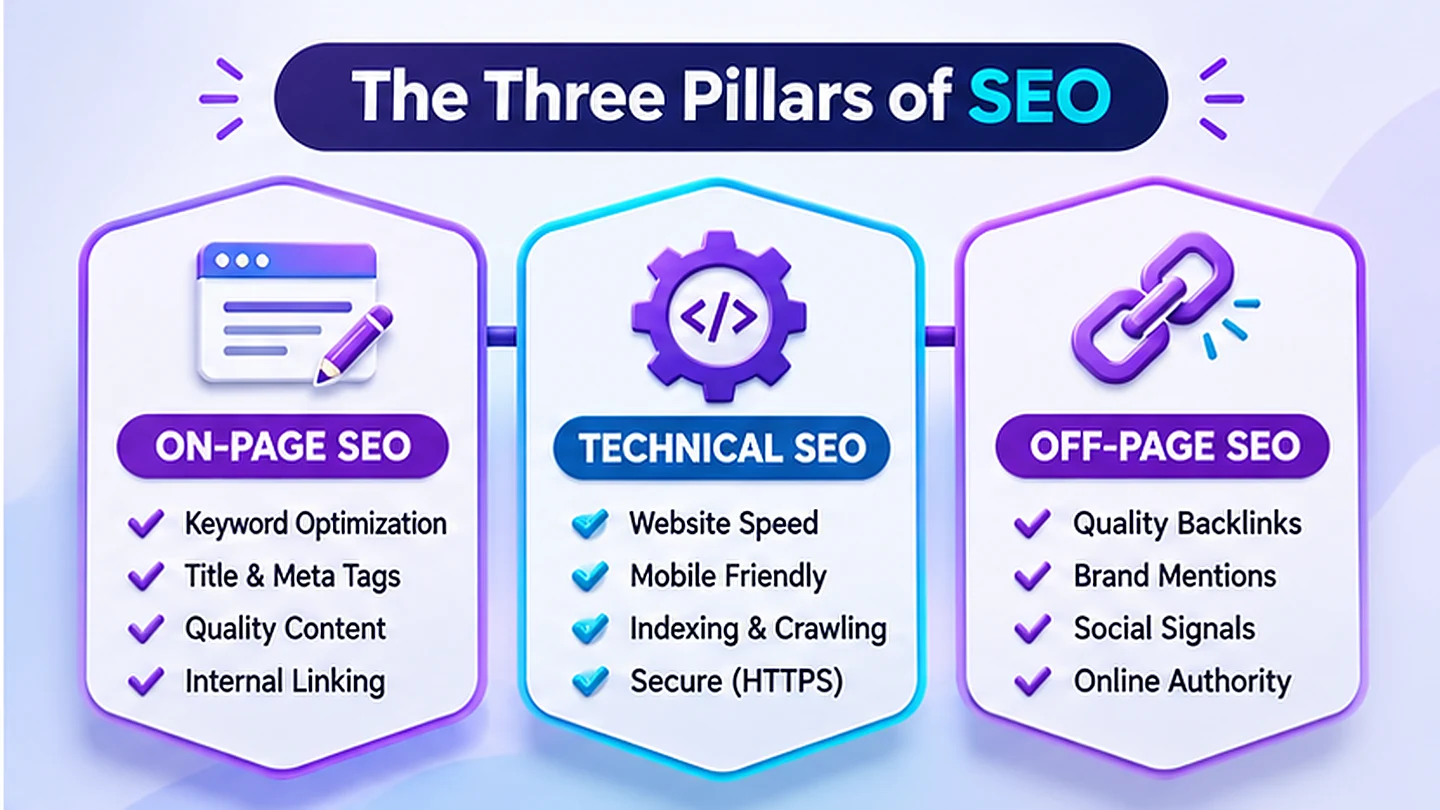
Infographic showing on-page, technical, and off-page SEO pillars
The Benefits of SEO for Small Businesses
Good SEO creates opportunities throughout the customer journey. A useful service page can introduce your brand to someone searching for help, while a detailed guide can answer questions before that person is ready to contact you.
Greater search visibility: Relevant pages have more opportunities to appear for searches that match your business.
More qualified visitors: Targeting specific search intent can bring people who are actively comparing services, researching products, or looking for a local provider.
Better website experience: Clear navigation, readable pages, fast loading, and mobile-friendly layouts help visitors as well as search engines.
Long-term value: Helpful content can continue attracting attention after publication, although rankings and traffic may change over time.
Stronger local discovery: A well-maintained local presence can help nearby customers discover a business when they search for services in their city.
Importantly, success should be measured through useful enquiries and business outcomes, not traffic numbers alone.
How to Improve Website SEO: 10 Practical Steps
1. Research Keywords Based on Search Intent
Start with the questions your customers actually ask. Someone searching “what is website SEO” wants information, while someone searching “web design agency in Lahore” may be comparing service providers. Group related terms by intent and assign a clear main topic to each important page. Google Search Console can reveal queries that already generate impressions for your website.
2. Write Helpful, Original Content
Answer the main question early, then provide practical explanations, examples, and next steps. Avoid copying competitors or publishing thin pages just to target extra keywords. Original case studies, service details, and answers to common customer concerns make your content more useful. Review older articles periodically so facts, screenshots, and links remain accurate.
3. Improve SEO Titles and Meta Descriptions
Give every important page a unique, descriptive title that explains its topic. Put the most relevant phrase near the beginning when it reads naturally. Write a concise meta description that summarizes the page and gives users a reason to visit. Search engines may create their own snippets, so the description is guidance rather than a guaranteed display or direct ranking boost.
4. Organize Headings and Page Structure
Use one clear main page heading, usually an H1, followed by H2 sections and H3 subsections where appropriate. Headings should describe the content beneath them, not exist merely to repeat keywords. Short paragraphs, descriptive subheadings, and logical sections make longer articles easier to scan on desktop and mobile devices.
5. Optimize Images Without Slowing the Page
Choose relevant, high-quality visuals and give files meaningful names, such as website-seo-checklist.webp. Add descriptive alternative text that explains what each image shows. Compress oversized images, use appropriate dimensions, and consider modern formats such as WebP. Avoid placing essential explanations only inside graphics; include important information in the surrounding text as well.
6. Add Useful Internal and External Links
Internal links help visitors discover related services and articles. For example, a business owner reading about site structure may benefit from VectoVision’s Creative Web Design page, while someone planning ongoing promotion can explore Digital Marketing. Use natural, descriptive link text instead of repeating “click here.” Link to trustworthy external resources when they genuinely help readers, such as Google’s SEO Starter Guide.
7. Make Your Website Fast and Mobile-Friendly
Test important pages on a real phone, not just a desktop preview. Check that menus work, buttons are easy to tap, and text remains readable. Optimize large images, avoid unnecessary plugins and scripts, and use reliable hosting. Tools such as PageSpeed Insights help identify performance issues, but focus on fixes that improve real visitor experience rather than chasing a perfect score.
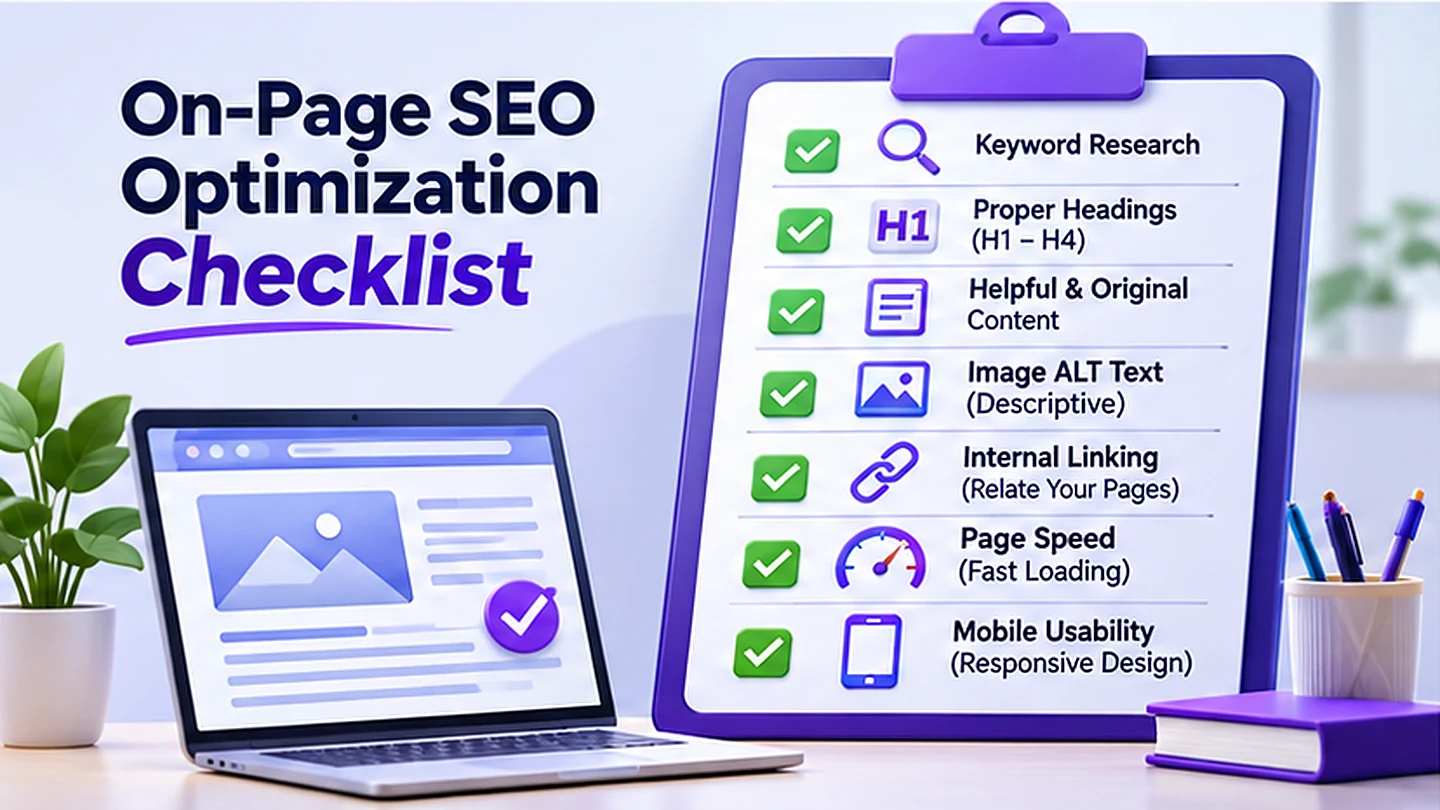
On-page SEO checklist with keyword research, headings, images, links and page speed
8. Check Technical SEO and Indexing
Make sure important pages return a successful response, are not unintentionally marked noindex, and can be reached through your site navigation. Submit a sitemap in Google Search Console, then inspect key URLs to understand whether Google can index them. Fix broken links and redirect outdated URLs to genuinely relevant replacements. Do not redirect every deleted page to the homepage; an appropriate 404 or 410 can be correct when no replacement exists.
9. Strengthen Local SEO
If your business serves a particular area, explain that location clearly on relevant pages. Keep your business name, address, contact details, and operating information accurate. Maintain your Google Business Profile, select appropriate categories, and encourage genuine customer reviews without offering misleading incentives. A Lahore business, for example, can create useful pages that describe services and projects for customers in Lahore without repeating the city name unnaturally.
10. Earn Trust Through Real Expertise
Show the people, process, and experience behind your work. Publish authentic portfolio examples, clear service information, and verifiable customer feedback with permission. Useful references from other websites can help users discover your brand, but buying spammy backlinks or exchanging links at scale is risky. Prioritize work worth recommending rather than shortcuts designed only to influence rankings.
How to Measure SEO Performance
SEO needs regular review. In Google Search Console, watch impressions, organic clicks, click-through rate (CTR), search queries, and indexing status. In Google Analytics, review what visitors do after arriving: which pages they explore, whether they submit enquiries, and which content supports conversions.
Compare meaningful periods rather than worrying about every daily fluctuation. If impressions increase but clicks do not, review the queries and how your page appears in results. If visitors arrive but leave without contacting you, evaluate the page’s clarity, relevance, and calls to action. These measures tell a more useful story than rank position alone.
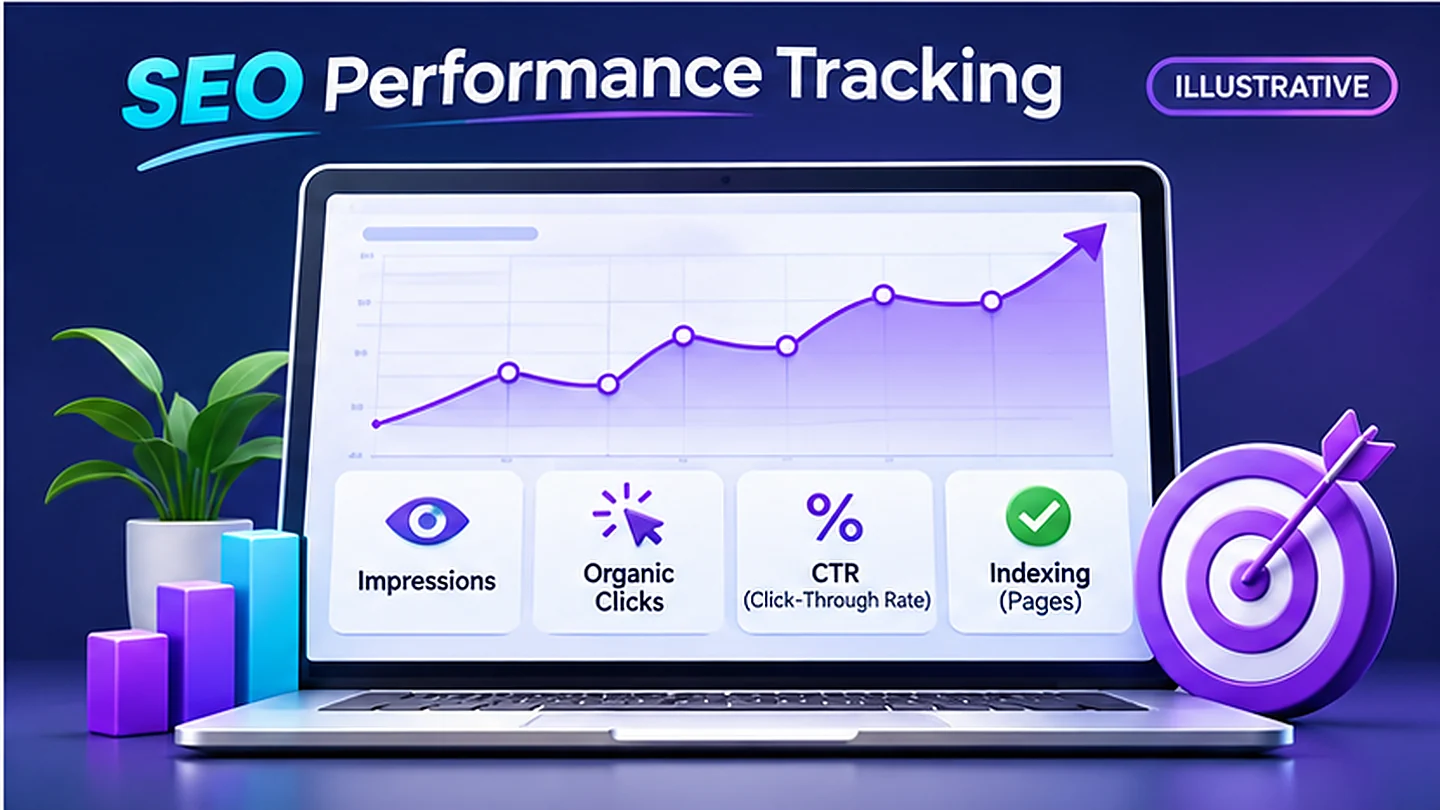
Illustrative SEO dashboard showing impressions, clicks, click-through rate and indexing
Common SEO Mistakes to Avoid
Avoid keyword stuffing, generic titles across multiple pages, copied content, broken internal links, and oversized images. Do not assume a sitemap guarantees indexing or that every non-indexed URL is an error. Likewise, resist claims promising a guaranteed first-place ranking. Sustainable improvement comes from addressing real visitor needs and maintaining a technically sound website.
Final Thoughts: Build SEO That Supports Your Business
The best way to improve website SEO is to combine valuable information, accessible design, reliable technical foundations, and consistent measurement. Start with your most important pages, make a few thoughtful improvements, and keep learning from your results.
At VectoVision, we believe great digital experiences should be attractive, useful, and easy to discover. Explore our Design & Branding services or contact our team to discuss a website that supports your business goals.
1 Comment
This article provides a clear and practical explanation of SEO, making it easy to understand even for beginners. I particularly appreciated the tips on keyword research, website optimization, internal linking, and Google Search Console. The step-by-step guidance is genuinely helpful for improving website performance and search visibility. VectoVision has done a great job presenting valuable information in a simple, professional, and engaging way. Definitely worth reading!